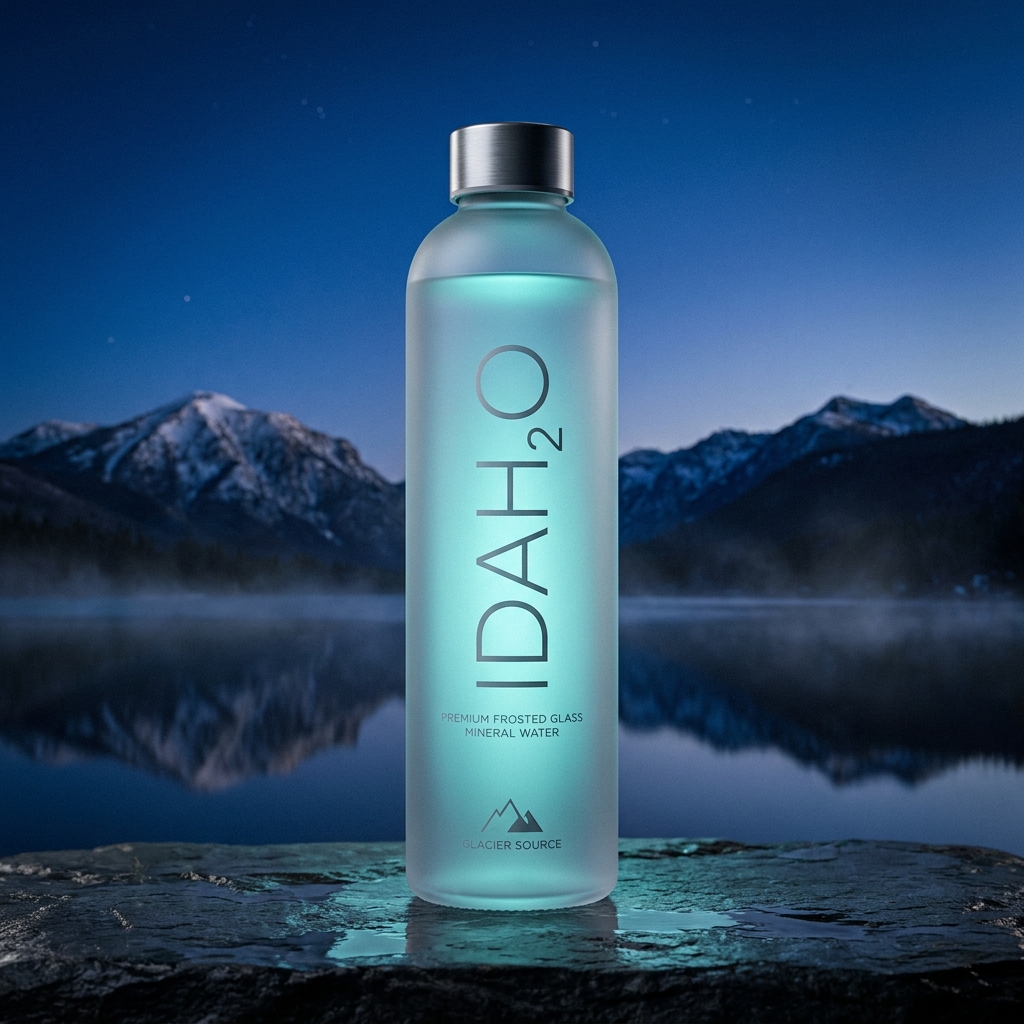
The bottle that disappears.
The planet that doesn’t.
IDAH2O is premium Idaho mountain water in a bottle that returns to the earth in 80 days — not 450 years.
Plastic was a 20th-century miracle.
It’s a 21st-century catastrophe.
plastic bottles purchased every minute globally (UNEP).
for one traditional PET bottle to break down in nature.
microplastic particles found in a typical liter of bottled water (PNAS 2024).
annual economic cost of ocean plastic pollution (The Ocean Cleanup).
The bottled water industry created this. We’re building the way out.
Two miracles.
One bottle.
The Water
Sourced from the Eastern Snake River Plain Aquifer. Filtered naturally through 400+ miles of volcanic basalt beneath 756,000 acres of federally protected watershed. Among the purest, most mineral-rich source waters on Earth.
The Bottle
Our proprietary PHA bioplastic formulation developed right here in Idaho. Certified marine- and soil-biodegradable in under 80 days. Patent-pending technology born from a $10M USDA-funded biomaterials pipeline.
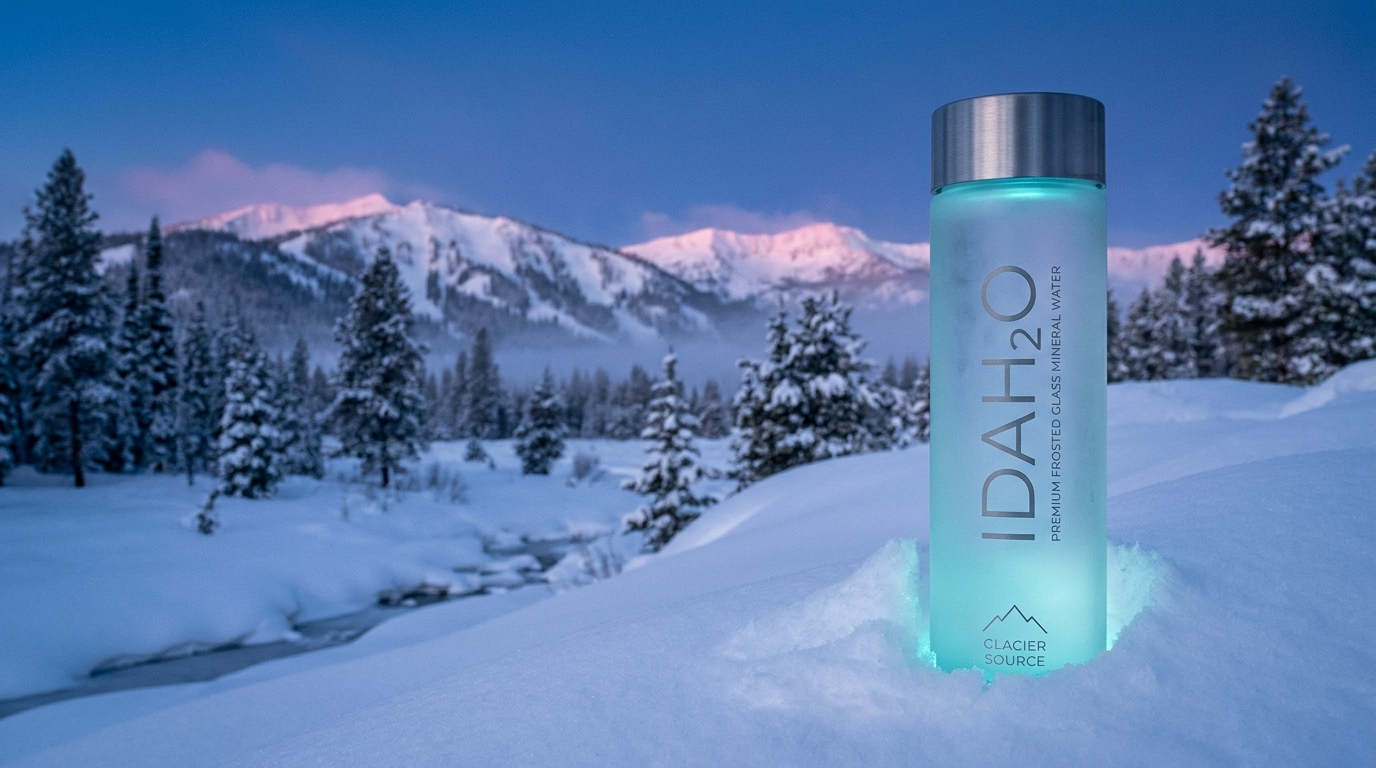
Born in the snowpack.
Bottled at the source.
Taste you can trace
to the source.
Snowmelt from the West Central Mountains spends years filtering through 400+ miles of volcanic basalt before it ever reaches us. What arrives is naturally soft, silica-rich, and almost untraceably low in sodium — the unmistakable signature of pristine high-mountain water.
On the palate
Natural silica gives the water a soft, almost velvety body — never sharp or metallic.
Ultra-low sodium (~3 mg/L) means no salty aftertaste — it simply finishes clean.
Low calcium & magnesium hardness keeps every sip smooth and weightless.
A balanced pH of 8.0 lends a subtle, naturally sweet edge — crisp without bite.
Every molecule starts in Idaho.
The water is Idaho snowmelt. The bottle is brewed from Idaho-grown potato & sugar-beet starch — the very crops that made the state famous, fermented into fully biodegradable PHA. Source and vessel, from one watershed.
It’s not plastic.
It’s biology.
Polyhydroxyalkanoate (PHA) is a fully biodegradable polymer produced by microbial fermentation. It returns to soil and ocean as harmless biomass. Zero microplastics. Zero forever footprint.
Soil-Biodegradable
Composts naturally in ambient environments.
Marine-Biodegradable
Breaks down safely in ocean water.
100% Non-Toxic
Leaves no chemical residue or microplastics.
The massive shift to sustainable packaging.
“49% of Gen Z and 47% of Millennials will pay a premium for sustainable packaging.”
Liquid Death proved consumers will pay 3–4× tap-water cost for a
brand story, hitting a $1.4B valuation.
Biodegradable is the ultimate packaging moat.
The Triple Moat.
Source Moat
Exclusive, long-term rights to one of America’s most protected, pure, and mineral-rich volcanic aquifers.
Materials Moat
Patent-pending PHA formulation engineered specifically for clear liquid containment with a multi-year R&D head start.
Brand Moat
100% American-made, aggressively climate-first positioning targeting the lucrative premium wellness demographic.
Path to Market.
The Founder.
Gonzalo D.
Founder & CEO
Tech & healthcare hyperscaler. Co-founder of 210 Digital Marketing, patent holder in AI & biometrics, and architect of a 9-figure telehealth exit.
Fuel the revolution.
“We didn’t start IDAH2O to sell water. We started it to prove that the most polluting product in modern history can become the most regenerative.”